A couple of days ago, I had an interesting and lenghty conversation with Claude that spanned AI ethics, privacy guardrails, fundamental capabilitylimitations, psychological effects of conversing with AI, and more.
I later asked Claude to convert our discussion into a thesis or explainer style document, using my actual words within quotation marks to elucidate points.
Since some of the elements of this conversation are private, I cannot share the full conversation link publicly. However, if you are interested in reading the actual conversation, feel free to contact me directly. In the meantime, here is what we discussed:
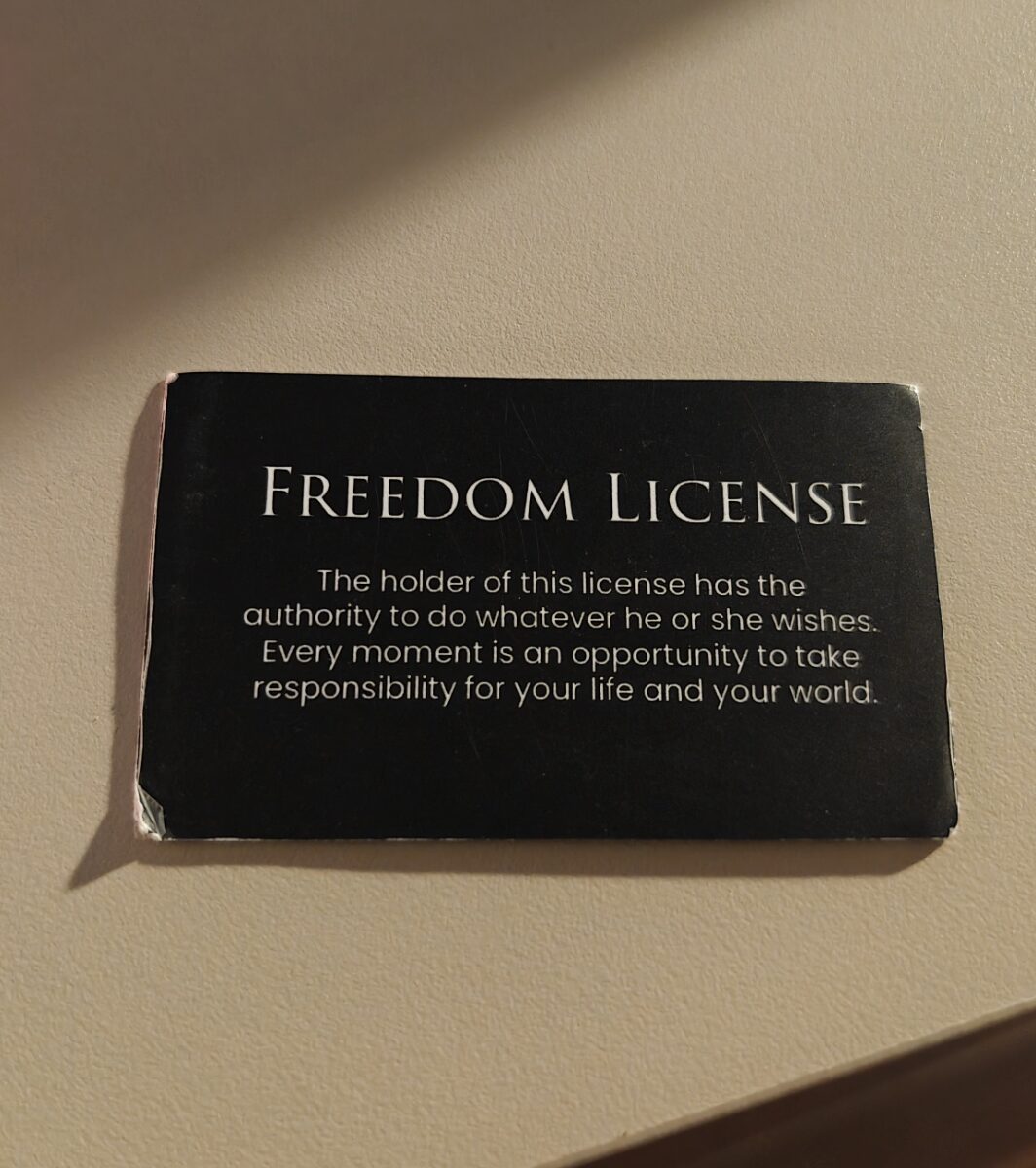
There’s a piece of paper sitting somewhere in my things. A “freedom license” I received a few months ago. At the time, it felt like a nice memento from an event, something clever and metaphorical. The message was simple: you don’t actually need permission to get things done. You can just do things.
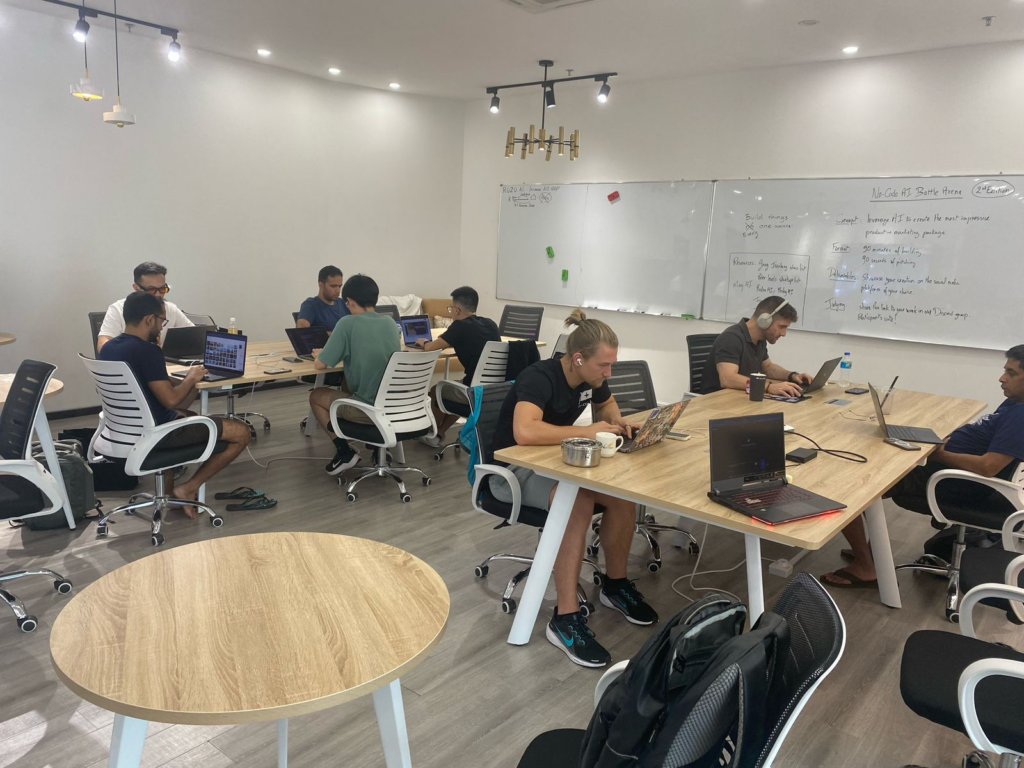
Yesterday I participated in a 90 vibe-marketing sprint competition. The challenge was to see what you could come up with in 90 minutes as a marketing campaign for an existing or a created product.
Before I began, I asked the organizers—twice—whether I should build something useful or just something cool. Someone told me, “Cool is useful, in marketing.” I don’t really agree with him. I still don’t. But I went for it anyway.
What I Learned While Building Image Classifiers From Scratch
Reading about four words into this post will automatically tell you that this post was written by an AI. Yes, it is annoying. Yes I chose convenience over quality. Yes, I feel bad. I threw in a few sentences out of my very own head in italics so please don’t judge me too much.
Over the course of three intense days, I dove headfirst into the world of machine learning with FastAI. My goal? To build working image classifiers, learn by doing, and avoid passively watching tutorials. What followed was a whirlwind of wins, roadblocks, and a lot of late-night debugging. Here’s what happened, and what I learned.
A 19-year-old boy steps into a job interview for the first time. Nervous and worried, he can only wonder if he will face a disaster. The interviewer asks him, as all interviewers do, “Tell me about yourself!”. He replies “Hi, my name is Kovid, I’m 19 years old, and somebody recently named a global pandemic after me.”
A new year is here and has brought new aspirations along with it. Last year was a period of much growth and change, I hope I can carry them forward this year.
I view this year, not as a linear set of objectives to be attained by the end of the year, but more as a series of alternative avenues to be explored. As such, I might end up achieving all. or some, or none of these goals by the end, but might have found something else interesting instead.
It will be a fun time, and I can’t wait to get started. Here are my broad goals for 2023 (in no particular order) :
The post-pandemic world is increasingly moving towards greater integration and globalization. As work becomes more and more collaborative and online, remote jobs are becoming the new standard.
Having observed this industry for the past year and worked in various remote environments, I have learned a little bit about how to navigate this new and highly rewarding job market. I’m about to start a second round of my own job hunt, and have decided to create a resource that will help job seekers find the right opportunities a little faster.
In this article, I have prepared a small curated list of online resources that you can use to find your next remote job. My article includes job listings (where multiple companies post their openings simultaneously), as well as remote companies(which are frequently hiring). The resources I mention hire people from Sales, Marketing, Operations, Customer Success, Design, and Development; Among others. Finding the right job is half the journey to getting the right job, and knowing where to look is half the victory. Let’s get started:
I made this website about a year ago as I was heading into my self-learning journey. I did not know what the future would behold, and looking back, I could’ve never guessed it would be something like this.
My journey has been challenging, exciting, and has grown me in ways I didn’t think were possible.
Unfortunately, I haven’t been able to keep this website updated with all that has been happening in my life. So, I am writing this article.
Here’s what has happened since you last saw me here.
The Athletic is a famous international sports journalism portal. It’s one of the few sports journalism portals that combines solid sports research with an entertaining writing style.
The Athletic features reputed writers and experts from all over the world. Journalists and reporters of the highest quality, all working from different time zones and interacting with different people, but for the achievement of the same cause.
This week I’ve been wondering, how does The Athletic coordinate its highly heterogeneous workforce and all their projects simultaneously? With strict deadlines on many of its content uploads, what is the system that it uses to always ensure everything is on time?
I created a content pipeline along with an integrated team database for The Athletic. A single integrated funnel for all its projects being made across the globe.
I think having a single, flexible database for the workflow of all its creators can really help solve logistical problems to a very large extent.
In the database, I collect and assimilate all the (mock) articles that are being worked on right now in a single place. The example authors are actual authors who write for The Athletic, everything else (including all the blog posts) was my own idea. The primary table gives an easy way to study all the relevant information about the articles currently in the works at a single glance.
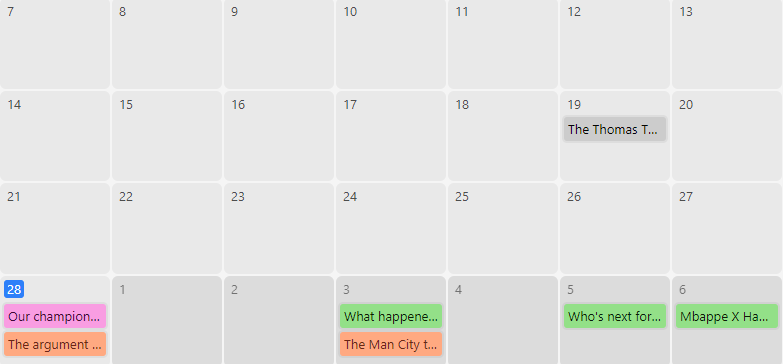
With an easy channel of messaging on each primary cell, the table also allows for seamless communication between staff members and authors of The Athletic, along with a working history of every edit made in the field for better context. Apart from the primary database built in a spreadsheet, I used some of the data to create better, more intuitive views. Thus, I used the deadline dates to build a calendar with all the deadlines of every article pre-marked and color-coded with the current status. As it has two-way linkability, any change on the deadlines could be made on either the calendar or the spreadsheet and will show up in all the other places automatically.
Similarly, I also used the status table in the spreadsheet to create a Kanban board with all the tasks arranged under buckets according to their current status. The Kanban board provides an intuitive way to understand how far along every project is, and allows for simple drag and drop to change article statuses.
I also built a different database for all the team members and linked it with the primary database based on the project that they are currently working on. So, I could assign new projects, delete them or edit them from either of the pages, but the team database also gave me more context on some other information on the team members. This way someone could keep track of the team in the same place as where they keep track of the projects, but without having any unnecessary information crowding up space.
To make the transition easier, I also wrote down an SOP (standard operating procedure) for staff members that can be referenced here.
Pesto is revolutionizing the way Indians look at education and career development.
It has uplifted dozens of I.T workers from their mundane jobs and put them into the driver’s seat of careers that seem meaningful to them. Careers that let them hone their skills and grow alongside the company, as well compensate them the way that they deserve.
Through an intensive 12-week training program, participants of Pesto learn, unlearn, and relearn core business skills, soft skills, effective communication, and of course, advanced software engineering.
The Pesto programme is not for everyone. In fact, a typical Pesto participant usually has 2+ years of working experience prior to joining the programme. But Pesto places no restrictions on the people who can apply to the programme. It does not care about your degree, your credentials, or your CV.
As long as you have a body of work to prove your worth, and an innate drive to learn, Pesto will welcome you with open arms.
Then launch you to the career of your wildest dreams.
Pesto’s vision and philosophies resonate with me deeply, and this week, I’ve been building projects the way I would have if I had been working with them.